The $80K Starting Floor: Why Data Center Technician Is the Career-Switcher's Smartest Move Right Now

The $80K Starting Floor: Why Data Center Technician Is the Career-Switcher's Smartest Move Right Now

The United States is in the middle of the largest infrastructure build-out since the interstate highway system, and almost nobody outside the industry is talking about it. Hyperscale operators, colocation providers, and sovereign cloud builders have announced more than $500 billion in US data center investment through 2027. That capital is turning into concrete, cable trays, and cooling towers in Northern Virginia, Phoenix, Dallas, Chicago, and a dozen secondary markets, and it has to be staffed.

The problem is that the industry cannot find enough people. Equinix, Digital Realty, and AWS have each said publicly, in earnings calls and industry panels, that technician availability is a binding constraint on how fast they can bring capacity online. Industry projections put the shortfall at 250,000 qualified data center technicians by 2030. That gap is not going to be filled by computer science graduates. It is going to be filled by people willing to learn a specific technical skill set, show up for 12-hour shifts, and work with their hands in a physically demanding environment.

For someone evaluating a career change right now, this is not a marginal opportunity. It is arguably the clearest, most certain entry point into a growing skilled-trades sector available, with starting salaries that beat most roles requiring a four-year degree and a certification path measured in months, not years.

What the Job Actually Is

Before anything else, clear up what a Data Center Technician or Critical Facilities Technician actually does, because the title misleads people.

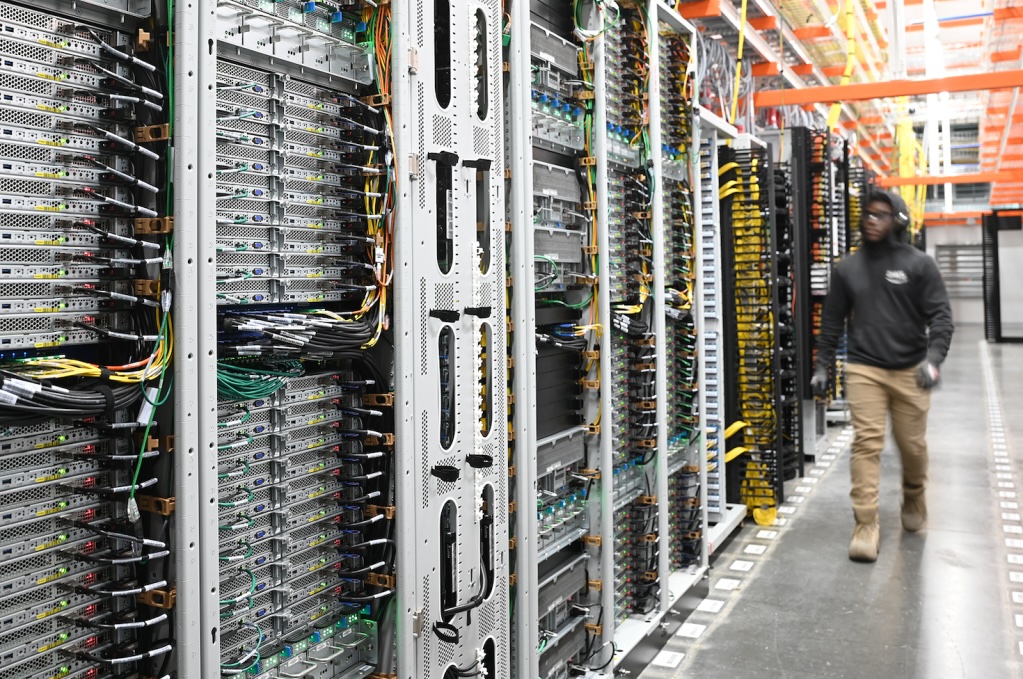
This is not a helpdesk job. It is not cloud provisioning. It is not software support. The work is physical infrastructure: structured cabling runs, hardware rack and stack, power distribution unit installation, UPS system maintenance, generator load testing, HVAC and cooling unit management, and hot-aisle/cold-aisle airflow optimization. On a given shift you might be pulling fiber through a raised floor, replacing a failed drive shelf in a live rack, logging thermal readings from cooling units, or coordinating a generator transfer test with a facilities manager.

The environment is loud, cold in the server aisles, warm near the power equipment, and requires constant attention to physical safety protocols. You will lift equipment, work in confined spaces, read single-line electrical diagrams, and make judgment calls under time pressure when something fails at 2 a.m. None of that requires a computer science background. It requires mechanical aptitude, attention to procedure, and the ability to stay composed when the stakes are high.

A Typical 12-Hour Shift

Most operational data center roles run on a shift rotation: four days on, four days off, or a similar pattern, with shifts running 7 a.m. to 7 p.m. or 7 p.m. to 7 a.m. On-call expectations vary by employer and seniority level, but entry-level technicians at colocation facilities often rotate on-call coverage even in their first year.

A day-shift handover starts with a walk of the floor: checking environmental monitoring dashboards, logging any alarms from the previous shift, and confirming that all critical systems are within parameters. The first half of the shift typically involves scheduled maintenance work from a ticket queue: a cage buildout for a new customer, a hardware swap for an existing tenant, or a planned UPS battery replacement. After lunch the work shifts toward reactive tasks and documentation. Before handover you brief the incoming shift, update the floor log, and flag anything that needs a follow-up.

Physically, expect to walk three to five miles on a shift, lift equipment up to 50 pounds repeatedly, and spend extended time crouching under raised floors or working at height on ladder access. It is not construction-level physical demand, but it is far from sedentary.

The AI Exposure Question

Every person evaluating a new field right now should ask the same question: how exposed is this role to automation over the next decade?

For data center technicians, the answer is as close to zero as any technical role gets. Anthropic's March 2026 analysis of task-level AI exposure rates the physical infrastructure tasks that define this job, hands-on fault diagnosis, power system management, cable installation, cooling unit maintenance, near the bottom of the exposure curve. You cannot remotely replace a failed UPS module or physically re-route cooling airflow with a language model.

Contrast that with the IT-adjacent roles that people changing careers might otherwise consider. Cloud infrastructure provisioning is being automated aggressively. Level 1 helpdesk support is being absorbed by AI triage tools. Data entry and basic network configuration are shrinking job categories. The data center technician role sits at the physical layer that none of those automation tools can touch.

The irony is sharp: the AI boom is itself the demand driver for data center technicians. Every GPU cluster that an operator brings online to train large language models requires physical infrastructure that has to be installed, maintained, and operated by humans on the floor. The technology displacing office workers is directly creating the labor shortage this article is about.

Where the Build-Out Is Happening

Northern Virginia, specifically the Loudoun County corridor, remains the single largest data center market in the world by capacity. Microsoft, Amazon, and Google are all expanding there, and Equinix and Digital Realty both operate significant colocation campuses in the market. The constraint in Northern Virginia is now power availability, not demand, which is pushing capital toward secondary markets.

Phoenix is adding hyperscale capacity at a pace that has overwhelmed local labor supply. Microsoft's campus in Goodyear and the AWS expansion in Mesa are the anchor projects, but a dozen smaller operators are also building there. Dallas-Fort Worth has become a preferred market for financial services data center work, with Iron Mountain and CyrusOne running major facilities alongside hyperscale campuses. Chicago is the hub for Midwest connectivity, with Equinix's CH-series campuses and a growing cluster in Elk Grove Village.

Each of these markets has a slightly different labor dynamic. Northern Virginia pays a premium because competition for technicians is intense. Phoenix is earlier in its build-out cycle, which means there are more entry-level openings but slightly lower starting salaries. Understanding which market you are targeting affects both your salary expectations and how quickly you can advance.

Colocation vs. Hyperscale: Two Different Day-to-Day Realities

Not all data center operator environments are the same, and people making this career move should understand the difference before targeting their job search.

Colocation facilities, the Equinix and Digital Realty model, house equipment owned by hundreds of different customers in the same building. The technician's job involves a higher degree of customer interaction, more varied work orders (because every cage looks different), and stricter access control procedures. The work is more relationship-managed, closer to a facilities services environment. Equinix's data center technician postings, which have listed base ranges of $75,000 to $92,000 in Northern Virginia and $70,000 to $85,000 in Dallas, reflect this operational model: broad technical competency, customer-facing documentation, and adherence to SLAs.

Hyperscale campus environments, AWS, Microsoft Azure, Google, are different. You are maintaining one operator's standardized infrastructure at massive scale. The work is more repetitive but also more procedurally rigorous; every task has a defined runbook, change control is tight, and the volume of physical work is higher because the campuses are enormous. AWS infrastructure technician postings in Northern Virginia have listed ranges starting at $28–$34 per hour for entry-level roles, which annualizes to roughly $58,000–$70,000, but total compensation including shift differentials and benefits pushes the effective package well above that. Digital Realty's Critical Facilities Engineer postings in Phoenix have listed $80,000–$100,000 for roles requiring two or fewer years of experience. Iron Mountain's data center technician postings in the Chicago market have listed $72,000–$88,000 at entry level.

The career path in hyperscale tends to be faster for people who like process-driven environments. The path in colocation tends to reward people who are comfortable with ambiguity and customer interaction.

The Certification Path: What to Get and When

The good news for people making this switch is that the certification path into this field is well-defined and does not require a degree. The bad news is that there is some real study involved; this is not a field where you can fake competency.

**Phase 1: Foundation (4–8 weeks, self-study)**

CompTIA A+ or CompTIA Network+ gives you the baseline technical vocabulary that hiring managers expect to see on an entry-level resume. A+ covers hardware, operating systems, and basic troubleshooting; Network+ covers networking fundamentals. Neither requires prior IT experience. Either can be self-studied using CompTIA's official materials or through platforms like Professor Messer (free) or Udemy courses. Cost for the exam vouchers runs $250–$350 per exam. Most people preparing for data center technician roles are better served by Network+ as a single credential than by A+ alone, because the networking vocabulary is more directly applicable to the floor environment.

With a Network+ in hand and no prior experience, you are competitive for entry-level technician roles at colocation facilities in secondary markets. Expect starting salaries of $65,000–$80,000 at this stage.

**Phase 2: Facilities-Specific Credentialing (3–6 months)**

The Data Center Facilities Operations Specialist (DCFOS) from AFCOM is the most practical mid-tier credential for someone targeting facilities-side roles. It covers power, cooling, physical security, and change management in a data center context. The CDCDP (Certified Data Center Design Professional), also from AFCOM, is a step up that is better suited for people targeting Critical Facilities Engineer or senior technician roles. Schneider Electric also offers its own APC-certified training program, which carries weight specifically at facilities that run APC power infrastructure (a significant portion of the market).

With a Network+ and a DCFOS or equivalent, you are competitive for mid-level roles. Salaries at the 2–3 year mark in Northern Virginia, Phoenix, Dallas, and Chicago range from $95,000 to $115,000. Digital Realty's posted ranges for Critical Facilities Technicians with 2–4 years of experience in the Phoenix market have hit $100,000–$118,000.

**Phase 3: Senior and Shift Lead (3–5 years in)**

Senior Data Center Technician and Shift Lead roles in top markets pay $120,000–$140,000 and above. At this level, operators expect you to hold or be working toward a CDCE (Certified Data Center Expert) or to carry an ETA International Data Cabling Installer certification alongside your facilities credentials. Some senior roles at hyperscale campuses in Northern Virginia have posted as high as $155,000 in total compensation when shift differentials and performance bonuses are included.

A Real Career Switch: From Logistics to the Data Center Floor

One technician now working in the Dallas market spent six years managing inbound receiving at a large fulfillment center. The role involved coordinating inbound truck schedules, managing a team of 12, and troubleshooting conveyor system faults. Solid operational work, but it had a compensation ceiling and limited forward trajectory.

Four months of evening study for CompTIA Network+ while continuing to work full-time. Passed on the first attempt, then started applying for entry-level data center technician roles. The logistics background proved directly relevant: shift management experience, familiarity with physical inventory systems, and a demonstrated record of working in high-pressure operational environments all showed up clearly in interviews. Starting salary at a Dallas-area colocation operator came in at $74,000 base plus shift differential, a 30 percent increase over the prior role. Eighteen months later, DCFOS completed, promotion to senior technician at $96,000. Currently pursuing the CDCDP.

The competencies that transferred were specific. Running a physical environment on a tight schedule, triaging system alerts by priority, managing vendor access under time constraints. Those show up directly in data center operations work.

Who Else Is Well-Positioned for This Transition

Logistics and facilities management backgrounds translate well, as the case above shows. Military backgrounds also map cleanly, specifically occupational specialties in signal, communications, electrical, or facility engineering: Army 25-series MOS, Air Force 3D or 2E series AFSC, Navy IT or FC rates. Service members using SkillBridge have placed directly into data center technician roles at Equinix and Iron Mountain, and some of those programs are now formalized. The GI Bill and VET TEC both cover the certification training programs that matter here.

Beyond that, HVAC and electrician apprentices who want to move into a climate-controlled, higher-paying environment are well-positioned because the mechanical systems knowledge transfers directly. Workers from retail or hospitality who can demonstrate reliability, shift discipline, and customer documentation experience are competitive at colocation facilities for entry-level roles, particularly in markets where the labor supply is thinner.

What this field does not require: a computer science degree, software development experience, or any prior work in IT. The barrier is the certification investment and the willingness to work shifts.

The Hiring Reality Right Now

Equinix, Digital Realty, Iron Mountain, CyrusOne, QTS, and Aligned Data Centers are all actively posting entry-level technician roles in the markets named above. AWS and Microsoft are posting through their standard job boards but also through staffing partners like Accenture Federal Services and ManTech for facilities-side roles on government-adjacent campuses. Many operators are explicitly waiving the IT experience requirement for entry-level roles because they have learned that it screens out exactly the candidates who tend to thrive in the physical operations environment.

The window for people making this move is open now, but it will not stay this open indefinitely. As the industry matures its training pipelines and community college programs start producing more dedicated graduates, the entry bar will rise. The advantage of moving in 2025 and 2026 is that operators are still hiring on potential and training in-house because they have no other option.

The Bottom Line

Data center technician is a role with an $80,000 floor in most major markets, a clear 18-to-36-month path to six figures, near-zero AI displacement risk, and a demand curve backed by half a trillion dollars in committed capital. It requires real technical learning and a willingness to work physically demanding rotating shifts. It does not require a degree, a software background, or years of prior IT experience.

For someone who has been watching office-based knowledge economy roles narrow while the trades fill up with workers who got there first, this is the sector where the timing is right.

See which data center operators are actively hiring on Redeployable. Entry-level roles at Digital Realty and others are listed with no prior IT experience required. The certification path, the salary data, and the operators looking for people exactly like you are all in one place.

Share this post
Reading Progress:

The $80K Starting Floor: Why Data Center Technician Is the Career-Switcher's Smartest Move Right Now

The United States is in the middle of the largest infrastructure build-out since the interstate highway system, and almost nobody outside the industry is talking about it. Hyperscale operators, colocation providers, and sovereign cloud builders have announced more than $500 billion in US data center investment through 2027. That capital is turning into concrete, cable trays, and cooling towers in Northern Virginia, Phoenix, Dallas, Chicago, and a dozen secondary markets, and it has to be staffed.

The problem is that the industry cannot find enough people. Equinix, Digital Realty, and AWS have each said publicly, in earnings calls and industry panels, that technician availability is a binding constraint on how fast they can bring capacity online. Industry projections put the shortfall at 250,000 qualified data center technicians by 2030. That gap is not going to be filled by computer science graduates. It is going to be filled by people willing to learn a specific technical skill set, show up for 12-hour shifts, and work with their hands in a physically demanding environment.

For someone evaluating a career change right now, this is not a marginal opportunity. It is arguably the clearest, most certain entry point into a growing skilled-trades sector available, with starting salaries that beat most roles requiring a four-year degree and a certification path measured in months, not years.

What the Job Actually Is

Before anything else, clear up what a Data Center Technician or Critical Facilities Technician actually does, because the title misleads people.

This is not a helpdesk job. It is not cloud provisioning. It is not software support. The work is physical infrastructure: structured cabling runs, hardware rack and stack, power distribution unit installation, UPS system maintenance, generator load testing, HVAC and cooling unit management, and hot-aisle/cold-aisle airflow optimization. On a given shift you might be pulling fiber through a raised floor, replacing a failed drive shelf in a live rack, logging thermal readings from cooling units, or coordinating a generator transfer test with a facilities manager.

The environment is loud, cold in the server aisles, warm near the power equipment, and requires constant attention to physical safety protocols. You will lift equipment, work in confined spaces, read single-line electrical diagrams, and make judgment calls under time pressure when something fails at 2 a.m. None of that requires a computer science background. It requires mechanical aptitude, attention to procedure, and the ability to stay composed when the stakes are high.

A Typical 12-Hour Shift

Most operational data center roles run on a shift rotation: four days on, four days off, or a similar pattern, with shifts running 7 a.m. to 7 p.m. or 7 p.m. to 7 a.m. On-call expectations vary by employer and seniority level, but entry-level technicians at colocation facilities often rotate on-call coverage even in their first year.

A day-shift handover starts with a walk of the floor: checking environmental monitoring dashboards, logging any alarms from the previous shift, and confirming that all critical systems are within parameters. The first half of the shift typically involves scheduled maintenance work from a ticket queue: a cage buildout for a new customer, a hardware swap for an existing tenant, or a planned UPS battery replacement. After lunch the work shifts toward reactive tasks and documentation. Before handover you brief the incoming shift, update the floor log, and flag anything that needs a follow-up.

Physically, expect to walk three to five miles on a shift, lift equipment up to 50 pounds repeatedly, and spend extended time crouching under raised floors or working at height on ladder access. It is not construction-level physical demand, but it is far from sedentary.

The AI Exposure Question

Every person evaluating a new field right now should ask the same question: how exposed is this role to automation over the next decade?

For data center technicians, the answer is as close to zero as any technical role gets. Anthropic's March 2026 analysis of task-level AI exposure rates the physical infrastructure tasks that define this job, hands-on fault diagnosis, power system management, cable installation, cooling unit maintenance, near the bottom of the exposure curve. You cannot remotely replace a failed UPS module or physically re-route cooling airflow with a language model.

Contrast that with the IT-adjacent roles that people changing careers might otherwise consider. Cloud infrastructure provisioning is being automated aggressively. Level 1 helpdesk support is being absorbed by AI triage tools. Data entry and basic network configuration are shrinking job categories. The data center technician role sits at the physical layer that none of those automation tools can touch.

The irony is sharp: the AI boom is itself the demand driver for data center technicians. Every GPU cluster that an operator brings online to train large language models requires physical infrastructure that has to be installed, maintained, and operated by humans on the floor. The technology displacing office workers is directly creating the labor shortage this article is about.

Where the Build-Out Is Happening

Northern Virginia, specifically the Loudoun County corridor, remains the single largest data center market in the world by capacity. Microsoft, Amazon, and Google are all expanding there, and Equinix and Digital Realty both operate significant colocation campuses in the market. The constraint in Northern Virginia is now power availability, not demand, which is pushing capital toward secondary markets.

Phoenix is adding hyperscale capacity at a pace that has overwhelmed local labor supply. Microsoft's campus in Goodyear and the AWS expansion in Mesa are the anchor projects, but a dozen smaller operators are also building there. Dallas-Fort Worth has become a preferred market for financial services data center work, with Iron Mountain and CyrusOne running major facilities alongside hyperscale campuses. Chicago is the hub for Midwest connectivity, with Equinix's CH-series campuses and a growing cluster in Elk Grove Village.

Each of these markets has a slightly different labor dynamic. Northern Virginia pays a premium because competition for technicians is intense. Phoenix is earlier in its build-out cycle, which means there are more entry-level openings but slightly lower starting salaries. Understanding which market you are targeting affects both your salary expectations and how quickly you can advance.

Colocation vs. Hyperscale: Two Different Day-to-Day Realities

Not all data center operator environments are the same, and people making this career move should understand the difference before targeting their job search.

Colocation facilities, the Equinix and Digital Realty model, house equipment owned by hundreds of different customers in the same building. The technician's job involves a higher degree of customer interaction, more varied work orders (because every cage looks different), and stricter access control procedures. The work is more relationship-managed, closer to a facilities services environment. Equinix's data center technician postings, which have listed base ranges of $75,000 to $92,000 in Northern Virginia and $70,000 to $85,000 in Dallas, reflect this operational model: broad technical competency, customer-facing documentation, and adherence to SLAs.

Hyperscale campus environments, AWS, Microsoft Azure, Google, are different. You are maintaining one operator's standardized infrastructure at massive scale. The work is more repetitive but also more procedurally rigorous; every task has a defined runbook, change control is tight, and the volume of physical work is higher because the campuses are enormous. AWS infrastructure technician postings in Northern Virginia have listed ranges starting at $28–$34 per hour for entry-level roles, which annualizes to roughly $58,000–$70,000, but total compensation including shift differentials and benefits pushes the effective package well above that. Digital Realty's Critical Facilities Engineer postings in Phoenix have listed $80,000–$100,000 for roles requiring two or fewer years of experience. Iron Mountain's data center technician postings in the Chicago market have listed $72,000–$88,000 at entry level.

The career path in hyperscale tends to be faster for people who like process-driven environments. The path in colocation tends to reward people who are comfortable with ambiguity and customer interaction.

The Certification Path: What to Get and When

The good news for people making this switch is that the certification path into this field is well-defined and does not require a degree. The bad news is that there is some real study involved; this is not a field where you can fake competency.

**Phase 1: Foundation (4–8 weeks, self-study)**

CompTIA A+ or CompTIA Network+ gives you the baseline technical vocabulary that hiring managers expect to see on an entry-level resume. A+ covers hardware, operating systems, and basic troubleshooting; Network+ covers networking fundamentals. Neither requires prior IT experience. Either can be self-studied using CompTIA's official materials or through platforms like Professor Messer (free) or Udemy courses. Cost for the exam vouchers runs $250–$350 per exam. Most people preparing for data center technician roles are better served by Network+ as a single credential than by A+ alone, because the networking vocabulary is more directly applicable to the floor environment.

With a Network+ in hand and no prior experience, you are competitive for entry-level technician roles at colocation facilities in secondary markets. Expect starting salaries of $65,000–$80,000 at this stage.

**Phase 2: Facilities-Specific Credentialing (3–6 months)**

The Data Center Facilities Operations Specialist (DCFOS) from AFCOM is the most practical mid-tier credential for someone targeting facilities-side roles. It covers power, cooling, physical security, and change management in a data center context. The CDCDP (Certified Data Center Design Professional), also from AFCOM, is a step up that is better suited for people targeting Critical Facilities Engineer or senior technician roles. Schneider Electric also offers its own APC-certified training program, which carries weight specifically at facilities that run APC power infrastructure (a significant portion of the market).

With a Network+ and a DCFOS or equivalent, you are competitive for mid-level roles. Salaries at the 2–3 year mark in Northern Virginia, Phoenix, Dallas, and Chicago range from $95,000 to $115,000. Digital Realty's posted ranges for Critical Facilities Technicians with 2–4 years of experience in the Phoenix market have hit $100,000–$118,000.

**Phase 3: Senior and Shift Lead (3–5 years in)**

Senior Data Center Technician and Shift Lead roles in top markets pay $120,000–$140,000 and above. At this level, operators expect you to hold or be working toward a CDCE (Certified Data Center Expert) or to carry an ETA International Data Cabling Installer certification alongside your facilities credentials. Some senior roles at hyperscale campuses in Northern Virginia have posted as high as $155,000 in total compensation when shift differentials and performance bonuses are included.

A Real Career Switch: From Logistics to the Data Center Floor

One technician now working in the Dallas market spent six years managing inbound receiving at a large fulfillment center. The role involved coordinating inbound truck schedules, managing a team of 12, and troubleshooting conveyor system faults. Solid operational work, but it had a compensation ceiling and limited forward trajectory.

Four months of evening study for CompTIA Network+ while continuing to work full-time. Passed on the first attempt, then started applying for entry-level data center technician roles. The logistics background proved directly relevant: shift management experience, familiarity with physical inventory systems, and a demonstrated record of working in high-pressure operational environments all showed up clearly in interviews. Starting salary at a Dallas-area colocation operator came in at $74,000 base plus shift differential, a 30 percent increase over the prior role. Eighteen months later, DCFOS completed, promotion to senior technician at $96,000. Currently pursuing the CDCDP.

The competencies that transferred were specific. Running a physical environment on a tight schedule, triaging system alerts by priority, managing vendor access under time constraints. Those show up directly in data center operations work.

Who Else Is Well-Positioned for This Transition

Logistics and facilities management backgrounds translate well, as the case above shows. Military backgrounds also map cleanly, specifically occupational specialties in signal, communications, electrical, or facility engineering: Army 25-series MOS, Air Force 3D or 2E series AFSC, Navy IT or FC rates. Service members using SkillBridge have placed directly into data center technician roles at Equinix and Iron Mountain, and some of those programs are now formalized. The GI Bill and VET TEC both cover the certification training programs that matter here.

Beyond that, HVAC and electrician apprentices who want to move into a climate-controlled, higher-paying environment are well-positioned because the mechanical systems knowledge transfers directly. Workers from retail or hospitality who can demonstrate reliability, shift discipline, and customer documentation experience are competitive at colocation facilities for entry-level roles, particularly in markets where the labor supply is thinner.

What this field does not require: a computer science degree, software development experience, or any prior work in IT. The barrier is the certification investment and the willingness to work shifts.

The Hiring Reality Right Now

Equinix, Digital Realty, Iron Mountain, CyrusOne, QTS, and Aligned Data Centers are all actively posting entry-level technician roles in the markets named above. AWS and Microsoft are posting through their standard job boards but also through staffing partners like Accenture Federal Services and ManTech for facilities-side roles on government-adjacent campuses. Many operators are explicitly waiving the IT experience requirement for entry-level roles because they have learned that it screens out exactly the candidates who tend to thrive in the physical operations environment.

The window for people making this move is open now, but it will not stay this open indefinitely. As the industry matures its training pipelines and community college programs start producing more dedicated graduates, the entry bar will rise. The advantage of moving in 2025 and 2026 is that operators are still hiring on potential and training in-house because they have no other option.

The Bottom Line

Data center technician is a role with an $80,000 floor in most major markets, a clear 18-to-36-month path to six figures, near-zero AI displacement risk, and a demand curve backed by half a trillion dollars in committed capital. It requires real technical learning and a willingness to work physically demanding rotating shifts. It does not require a degree, a software background, or years of prior IT experience.

For someone who has been watching office-based knowledge economy roles narrow while the trades fill up with workers who got there first, this is the sector where the timing is right.

See which data center operators are actively hiring on Redeployable. Entry-level roles at Digital Realty and others are listed with no prior IT experience required. The certification path, the salary data, and the operators looking for people exactly like you are all in one place.

Share this post

Oops! Something went wrong while submitting the form.